
Children are not small adults: they run hotter, sit still for longer, and produce laundry at a rate no fabric was designed to survive. Merino solves more of that problem than any other material — if you choose the right weight and get the fit right. Here is what actually matters.
The short version
- Merino at 17.5 micron is soft enough for children who reject scratchy wool.
- One layer covers a cold walk to school and an overheated classroom.
- Odour resistance means far less washing — the real parent benefit.
- 250 GSM is the sweet spot for school runs and winter play.
- Sizes run 4-5 through 13-14 years; size for fit, not for growing room.
The problem with a school day
A child's day is a series of temperature swings: a cold walk or bus stop, a warm classroom, a windy playground at lunch, then the walk home as the light goes. Most children are dressed for one of those moments and uncomfortable in the other three, which is how coats end up left on the field and jumpers end up tied around waists.
Merino handles the swing rather than picking a side. The fibre buffers temperature changes and moves moisture away as vapour, so the same layer works when they are sprinting and when they are sitting still. Practically, that means fewer arguments in the morning and fewer lost garments by Friday.
Is merino soft enough for children?
This is the question every parent asks, and it is fair: most people's memory of wool is a scratchy school jumper. Itch comes from coarse fibres, not from wool as a category — the thicker a fibre is, the more it pushes back against the skin instead of bending. The threshold where most people start to feel prickle sits around 22 micron; our merino measures 17.5, which is why it is used for next-to-skin layers in the first place. Everything we make is 100% Australian merino, and the children's range uses the same soft fibre as the adult one.
A note on sensitive skin: if a child has genuinely reacted to wool before, start with a single long sleeve rather than a full set, and wash it once before wearing so any residual manufacturing finish is gone. Detergent residue, not wool, is a surprisingly common culprit for itch.
Which weight for children
| Weight | When it works | Typical use |
|---|---|---|
| 165–190 | Mild days, active sport, indoor-heavy days | Layer under a hoodie, summer camps, travel |
| 250 | Autumn through winter — the default | School run, playground, winter walks, snow days |
| 320 | Deep cold and standing still | Sledging, watching a sibling's match, sub-zero mornings |
Our children's range is built around 250 GSM, which is the weight that covers most of a school year in most of the country.
What to actually buy
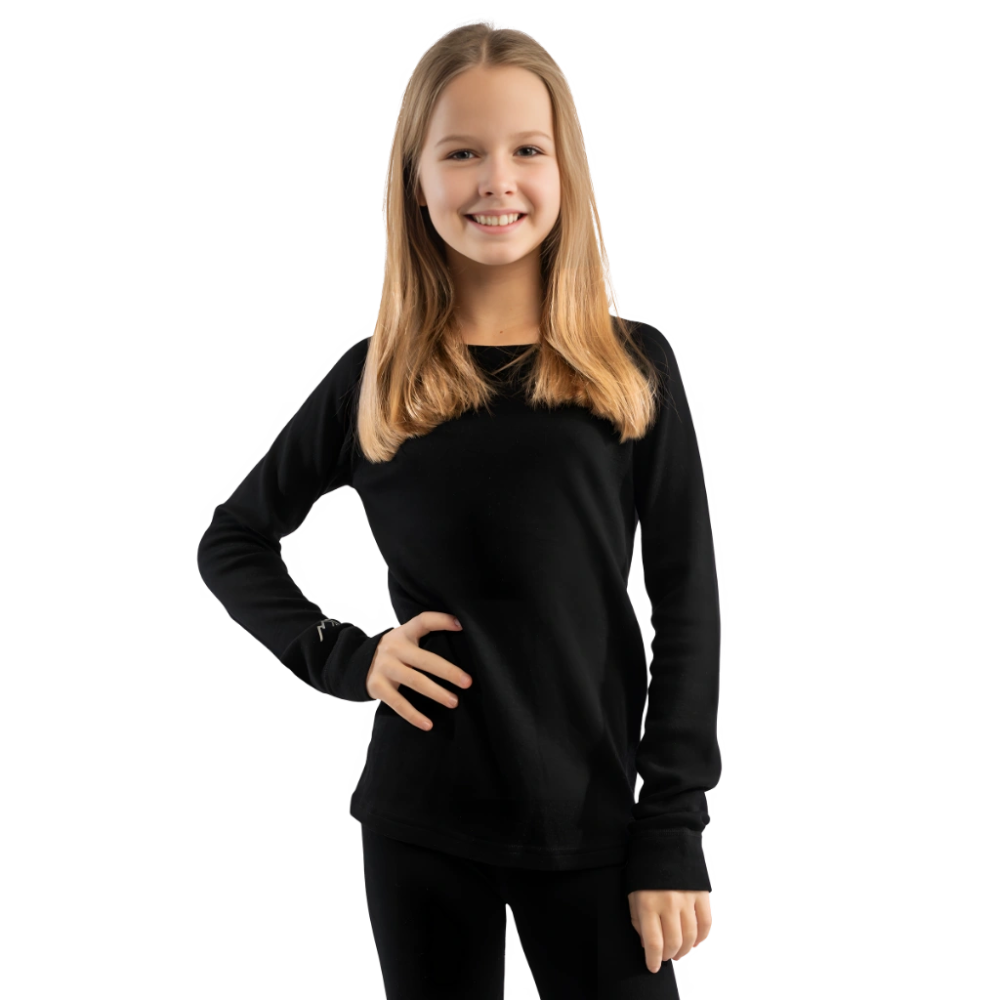
Long sleeve. The single most useful piece: worn alone indoors, worn under a coat outdoors, worn as pyjamas on a cold night without anyone noticing.
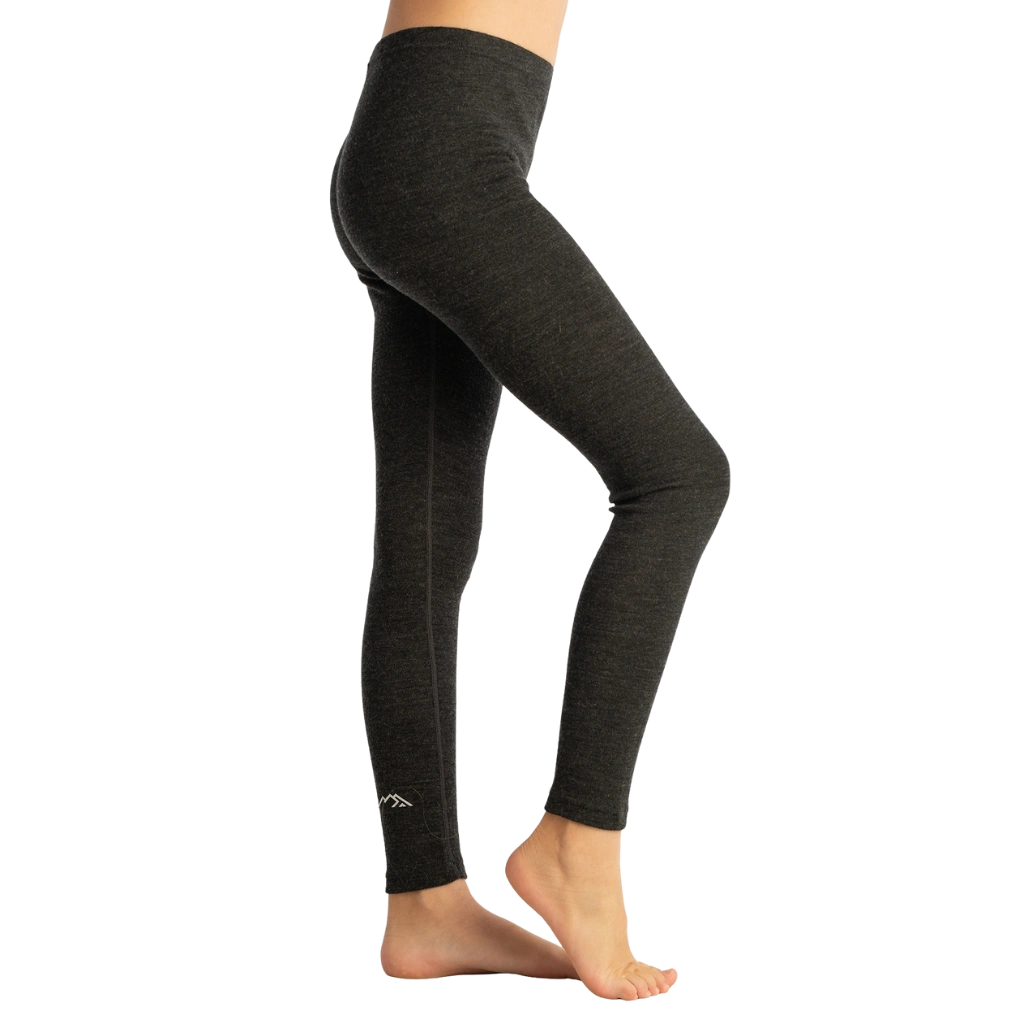
Base layer bottoms. The part parents forget. Legs are where children lose heat on a playground, and a thin merino bottom under trousers or snow pants changes the whole day.
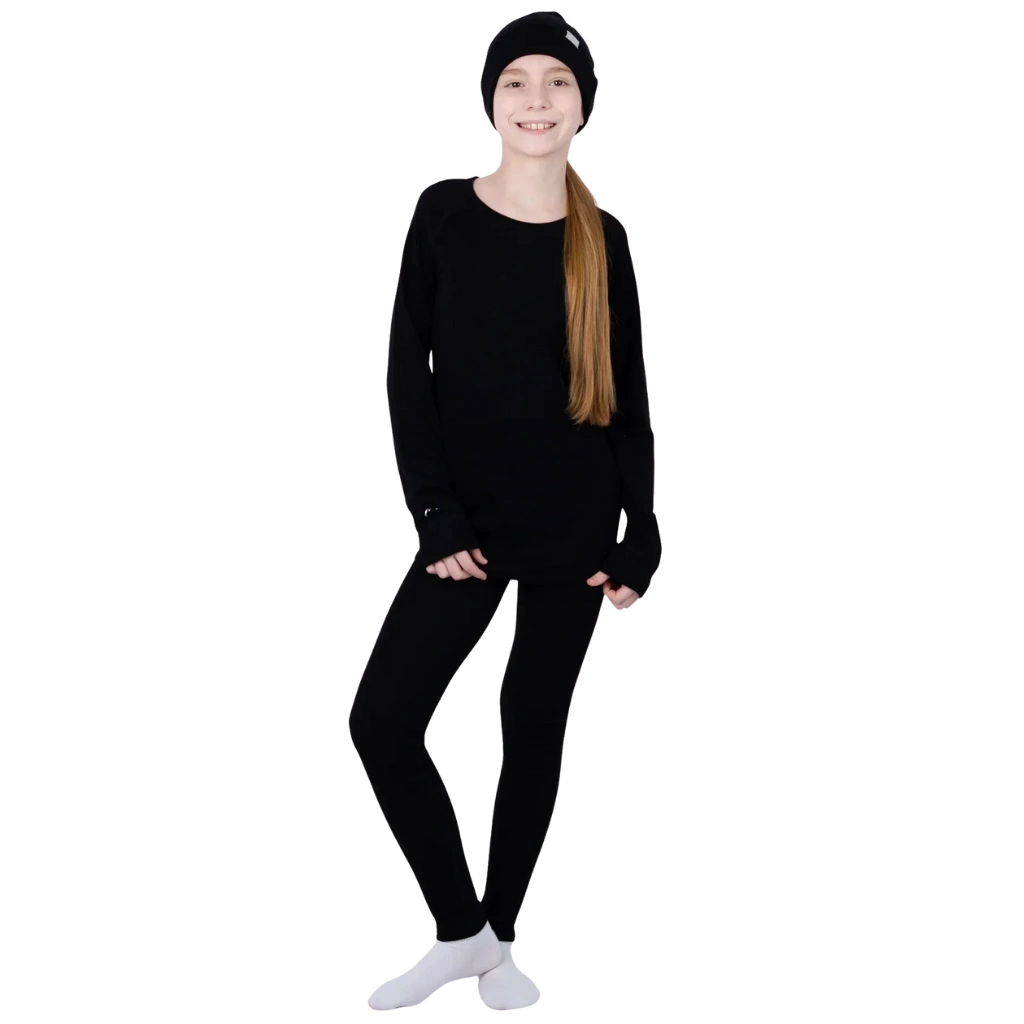
Set. Top and bottom matched, and in our sets a beanie is included — the simplest way to cover a child head to knee in one purchase.
Beanie. Because the hat is the layer that actually gets worn, and merino does not itch the forehead the way acrylic does.
Shop kids' merino →
Kids' sets →
Kids' beanies →
Back to school →

Sizing: fit beats growing room
The instinct is to buy a size up so the garment lasts two winters. With a base layer this backfires: the fabric works by sitting close to the skin, where it can move moisture. A layer that hangs loose is slower and colder, and it bunches under a coat. Buy the size that fits now, use the age ranges as the starting point, and check the chart if your child is between sizes.
Our children's sizes run from 4-5 years through to 13-14 years. Where a child sits between two ages, the more active they are, the more we would keep the closer fit.
The laundry maths that sells this to parents
A cotton school layer is a one-wear garment: it absorbs sweat, holds it, and smells by evening. Merino resists odour, so the same long sleeve routinely goes several days between washes — hang it overnight and it is fresh in the morning. Over a term that is a genuinely different volume of laundry, and it is the reason parents who try one piece tend to come back for the set.
Care is the same as the adult range: cold wash on a gentle cycle, no fabric softener, lay flat to dry. Children's clothing does not need special treatment, just the same restraint.
How to wash merino without shrinking it →
Which GSM weight should you buy? →

Build their winter in one go
Top, bottom and a beanie included — sized 4-5 through 13-14, in 100% Australian merino.
Frequently asked questions
What age is merino suitable from?
Our range starts at 4-5 years. For younger children, the same principles apply — fine fibre, close fit, no heat in the wash — but sizing is outside our current range.
Will my child overheat in wool indoors?
This is what merino is unusually good at. The fibre buffers temperature rather than only insulating, so a child in a merino long sleeve is generally comfortable in a warm classroom and on a cold playground in the same garment.
How many pieces do we actually need?
Two long sleeves and one set of bottoms will carry most children through a winter, precisely because merino does not need washing after every wear.
Do the kids' sets include a hat?
Yes — a beanie is included in our kids' sets, which is why the set works out better value than buying the pieces separately.
Can it go in the normal family wash?
Cold wash, gentle cycle, no softener, dry flat. It is compatible with a normal family laundry routine as long as it stays out of the tumble dryer.
Shop the range
Softer than they expect, warmer than it looks, and washed a fraction as often. That is the whole argument for merino at school.
Kids' merino →
Kids' sets →
Back to school →
Something for you too →